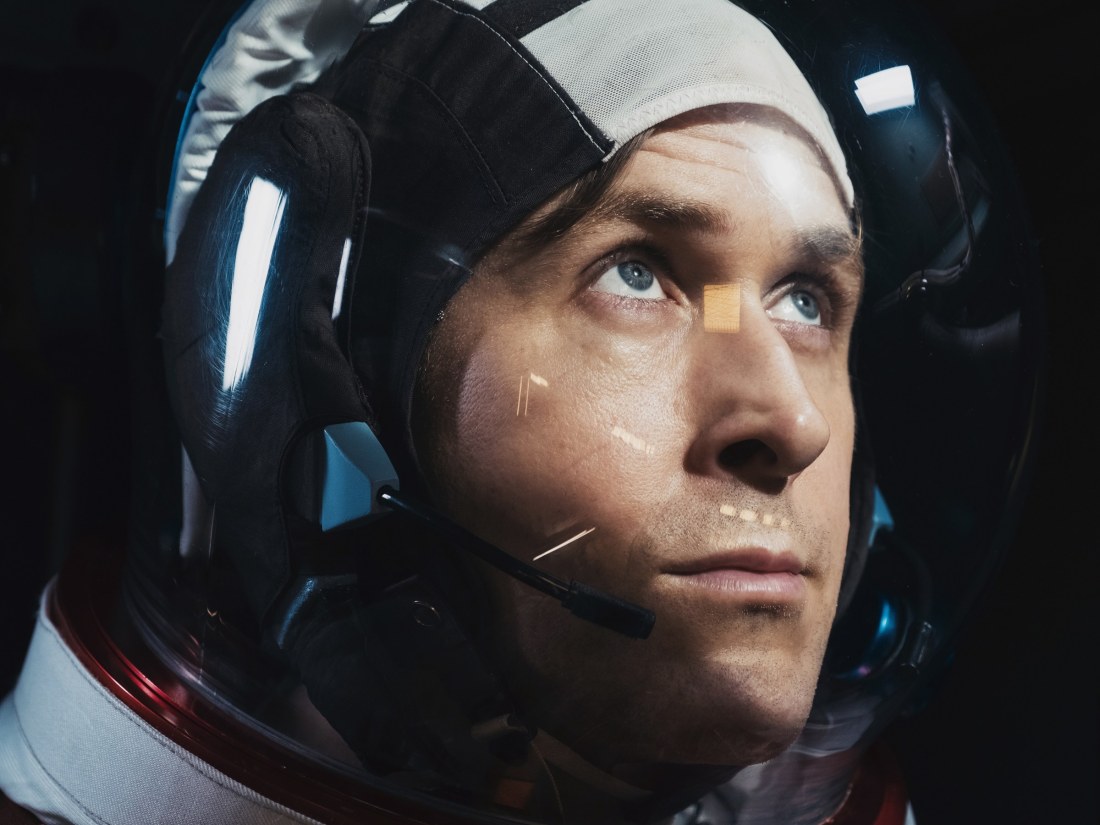
More than a legend, Neil Armstrong (Ryan Gosling) was a man.
As you may or may not remember, the hugely anticipated release of Oscar-winner Damian Chazelle’s new film First Man, the Neil Armstrong biopic starring Ryan Gosling, was overshadowed upon its release by a petty culture war of sorts. I know, the never-ending barrage of combative news makes it difficult to recall any specific controversy (especially the ones that are the product of the tantrum-prone right) but for those who forgot, First Man came under scorched-earth attacks from the alt-right aghast that the film reportedly did not feature the planting of the American flag (and, I believe, due to a suspect lack of bald eagles wielding dual machine guns while swooping over the lunar surface). Chazelle, Gosling, and the film were decried as pushing an unpatriotic telling of America’s finest achievement and branded sjw scum.
Obviously, and not like most on the right would care anymore, there was a very conscientious vision driving the film’s presentation of its story and that vision was not just to subvert the minds of our vulnerable children with communist propaganda. No, for better and for worse First Man is not about the space race; it is not about the American glory nor ingenuity that would have been gushing from this movie if it had been made 20 years ago.
It is about Neil Armstrong.
It is about Neil Armstrong the broken father, not the golden-haired family man. It is about Neil Armstrong the soldier, not the astronaut. It is about Neil Armstrong the human, not the legend. When we gaze up in awe at our heroes, tracking their trials, tribulations and world-altering accomplishments, universally we neglect to see these people for who they are: people. That’s what makes First Man’s take on its protagonist so unique. The humanity behind its hero is not hidden or blithely exaggerated, it is the central takeaway of the film.
Starting with the death of Armstrong’s young daughter, each fallen friend and near-fatal catastrophe for Armstrong is not just some new obstacle to leap over and grow from. To him and his equally damaged wife Janet (a phenomenal Claire de Foy), these are frozen daggers that slice off bits and pieces of their humanity with every mindless swing. Armstrong is an abject professional; his singular dream of touching the night sky is magically endearing, but no man is built to withstand the cost of achieving such a vision. Ryan Gosling is known for playing characters whose slick tongues are matched only by their charismatically carved exterior, but in one of his best performances to date, Gosling smartly rejects that style in exchange for an unnervingly withdrawn pensiveness. The limited lines Armstrong does get are spoken with a frigid mid-western draw–his stoic demeanor betraying just how far adrift he is from the normalcy we expect him to inhabit. Because as much as we may try to look away, the truth remains: there is a human cost to space travel, just as there is a human cost to anything with a prize so mighty and a danger so great. The story of First Man is not a story about that prize; it is about that cost.
Yet while the frigid dismay that permeates the Armstrong household threatens at times to strip First Man unnecessarily bare, it is thanks to Damien Chazelle’s masterful direction that the film is able to inject the hope and intimacy needed for such a personal story. The slight wobble of vivid, greyed close-ups is scored with a magnificent lullaby of awe (Justin Hurwitz who worked on Chazelle’s previous two films writes the best score of any movie this year), creating a mesmerizing atmosphere that perfectly places the travails of the Armstrongs in context and builds a movie that is as stifling in its portrayal of heartbreak as it is breathtaking in its portrayal of the search for something bigger.
On the flip side though, what holds First Man from matching its revolutionary ambitions with equally grandiose quality is a frustrating lack of understanding concerning what that “something bigger” is. The script, by the writer of Spotlight and The Post (Josh Singer), gives remarkable insight into the personal cost of success, yet it is unable to comprehend what that cost is for. The practical and existential meaning behind our race to the moon (or maybe lack thereof) are lost on Singer, and it becomes increasingly difficult as the movie goes on to reconcile Armstrong’s unshakeable drive with the indomitable tragedy that surrounds him when we don’t know the purpose of his sacrifices.
Of course, it’s unfair to characterize First Man’s struggle with comprehending the goal of space travel as a unique failing. Beyond movies and popular culture, this question has dogged our missions to space from the launch of Sputnik and continues to confound us to this very day. Until we figure it out though, First Man serves as an exorbitantly stark reminder that as long as people’s lives are on the line, the cost of success is more than just zeroes and media narratives.
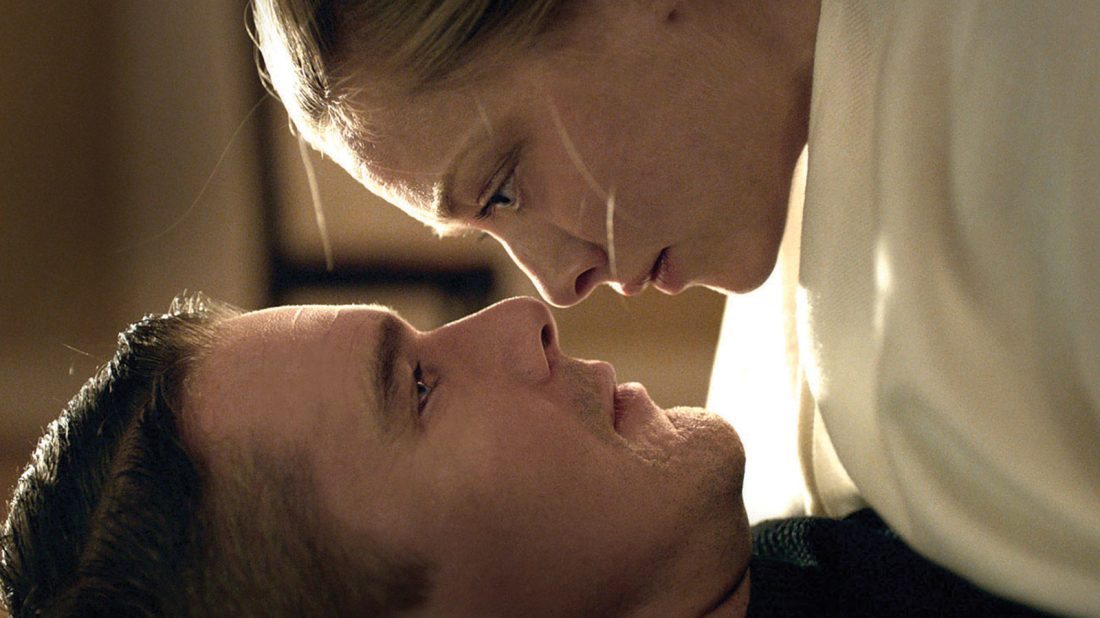
Ethan Hawke is remarkable as a man stuck in the shadow of humanity’s reprehension.
What is God’s place on a dying earth?
This is essentially the question at the core of First Reformed. After being confronted head-on with the perilous threat climate change poses to our planet, a reverend struggles to keep his faith in a God that is nowhere to be seen. But as First Reformed well knows, God means more to people than the old man who pears down on us from the heavens up high. Rather it is an embodiment of us. Our fears our hopes. Our savageness our reason. Our faults and our salvation. Whether or not we always care to admit it, the religious beliefs and philosophies we call our own are all directly a product of our, very personal, response to these simple internal battles.
Directed and written by Paul Schrader, First Reformed gives this pitched tug-of-war between hope and despair a scarily relevant 21st-century spin in one of the best and most urgent films of the year. Schrader, who also made Taxi Driver and Raging Bull, is no stranger to stories chronicling the downhill spiral of a man, and in First Reformed, he again turns to what has worked in the past with the tale of Reverend Ernst Tuller’s (Ethan Hawke) fall down the zealotic rabbit hole. It is a career performance from Hawke and one that has somehow wormed its way into the Oscar conversation nearly a year after its release because he dares to be emotionally compromised rather than just carry himself with a dreary sadness and punch-drunk anger. Contradiction and complication create the essence of First Reformed and Hawke’s ability to juggle disparate emotions provides the catalyzing ingredient.
A former military chaplain and family man, Tuller is now the minister of the ancient First Reform Church in upstate New York. A small and scarcely attended Dutch reform church that is presently little more than a tourist attraction, it is owned and operated by the near-bye Abundant Life Megachurch. Tuller appears on the surface as a man of faith and great intelligence, and indeed he is, but we soon glimpse flashes of his tragic past that have left him drowning in an unmitigated sorry. Isolated, sick, and downing handles of whiskey every chance he gets, Tuller has reached a tipping point of sorts. And then, after answering the pleas of a young woman (Amanda Seyfried), everything changes. The women, purposely named Mary, is pregnant with her husband Michael’s (Philip Ettinger) baby and Michael is none too pleased. A radical environmentalist, Michael fears for the world the baby will grow up in — a world swallowed hole by global warming and human negligence. And as much as Tuller tries to convince Michael otherwise, some of that fear rubs off on him and soon Tuller begins to spiral.
Beauty and hope lie in reach if only Tuller would reach out for it.
The term “radicalization” is thrown around freely in the news and throughout popular culture, yet normally its scope and context are frustratingly limited. Radicalization means brown people, Muslims, Isis, and maybe the occasional Nazi. It is an unjustified insanity with little basis in reality –an inexplicable cancer of naivety and anger. First Reformed’s genius lies in how it shows just how wrong this concept is. Tuller’s increasing extremism is just the flip side of the coin from the neglect shown by the corrupt Abundant Life Megachurch and its leader Jeffers (played with surprisingly resonant empathy by Cedric the Entertainer). None of the characters throughout the film are driven solely by ideology, but rather a mix personal factors that lead to the destruction of their world or their bodies just as often as they lead to their felicity and sense of beauty.
The duality of man is not a revolutionary concept, yet rarely has it been explored in film with such adept grace and relevance as it is in First Reformed. The balancing of hope and despair and action and caution will determine the survival of our society just as it has over the entirety of human history.
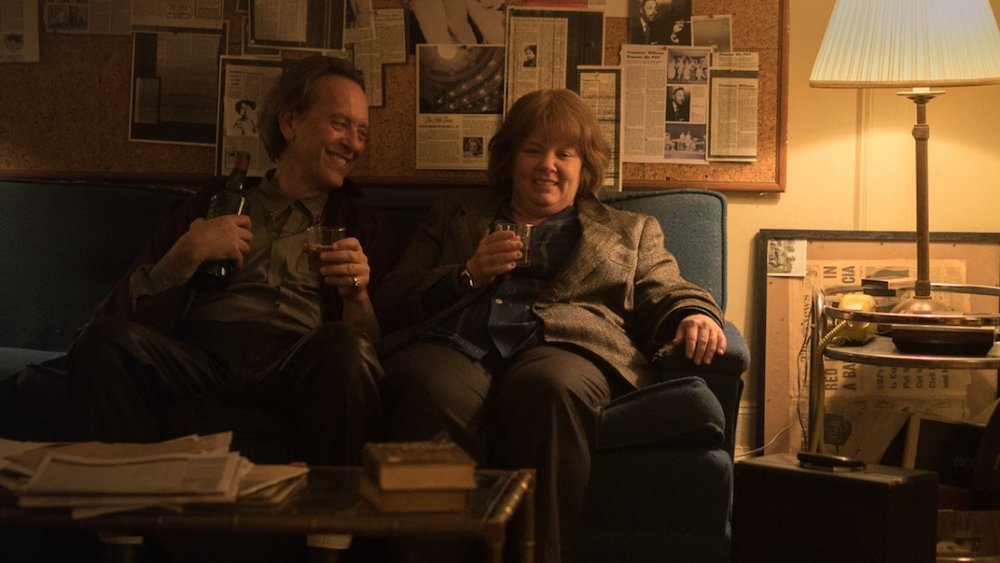
Richard E. Grant and Melisa McCarthy are every bit deserving of their future Oscar nominations in the poignant character study “Can You Ever Forgive Me?”
On its surface the story of Lee Israel is the story of a devious criminal mastermind; a literary forger who used her shockingly adept literary voice to impersonate a number of high profile authors in the form of personal letters and notes, which she then sold to every auctioneer in New York. But this is not the story Can You Ever Forgive Me? presents.
At least not really.
Starring the perennially criminally underappreciated Mellisa Mcarthy as the middling biographer Israel, the film forgoes the thrill and nuclear destruction normally associated with criminal enterprise for a much sadder look at the tragedy of Israel’s relationship with herself and the world around her. In many ways, this approach bears a strong resemblance to the style of the last film I reviewed (The Old Man and the Gun) in that each film rejects the typical bigger than life depiction of crimes for a noticeably subdued mediation on their context in the grander scheme of things.
In Lee Israel’s case, it is her commercial failings that have pushed her to the edge of the law. A moderately successful writer of biographies on (somewhat) important women, Israel’s work is increasingly out of touch with a society that craves the instant thrill delivered by the page-turners of writers like Tom Clancy. And it doesn’t help that Israel is, well, kind of a dick. Luckily Mcarthy’s lively performance and some quick-witted writing make the journey with Israel bearable (and sometimes quite enjoyable) but to the literary community and her agent (Jane Curtain), this behavior is not exactly helping to make the right inroads. As Israel’s agent reminds her “You can be an asshole when you’re rich”. So deep in debt, a sick cat in tow, and with no new book deal in sight, Israel’s discovery of the gold lined world of literary treasures requires little thought by her before she jumps headfirst in.
Israel is a drowning woman swimming towards the monstrous storms clouds above the horizon in hopes of rescue on the other side, and yet during her journey, there is a strange absence of the fiery tension of a fight with death. Instead, we are left with all the numb confusion that a dead-end in life is so good at eliciting.
And this is absolutely the right approach to take.
Directed by Marielle Heller (who also co-wrote with Nicole Holofcener), after choosing a much more “artsy” direction with her first film Diary of a Teenage Girl, Will You Ever Forgive Me? smartly takes the attention away from the more bombastic elements of Israel’s true story in order to focus its efforts on a nuanced portrait of a woman inebriated by fear and loathing. There is never any doubt that Israel is a wicked smart woman with immense talent, the sly glint of Mcarthy’s eyes proves this much, but her isolating decisions have boxed her into little more than a cautionary tale about the perils of disconnecting from your reality. She is the commercially unsuccessful version of Hemingway, and it is to Heller’s credit that Can You Ever Forgive Me? confronts this utterly unromantic truth head-on. Surprisingly, the film’s decidedly un-ambitious nature is its greatest boon here, allowing Heller to cut right to the heart of Israel’s brokenness. A timidly melodic piano score and a stale coffee color scheme are all that is needed to suck the audience into Israel’s shoes and trap them in a soul-suckingly hopeless prison of her own creation.
But of course Israel’s situation wasn’t hopeless and it is Heller’s ability to steer the film clear of rote art-house cliche that brings heart to the movie. Israel’s partner in crime and new friend Jack (played with a breathtaking gusto by Richard Grant) shares Israel’s hard-drinking and lone wolf ways. Yet despite being faced with a similarly poor way of life, Jack’s melodic speech and joyous ways show an alternative and Israel’s musical rapport with the man offers hope that she has this change in her.
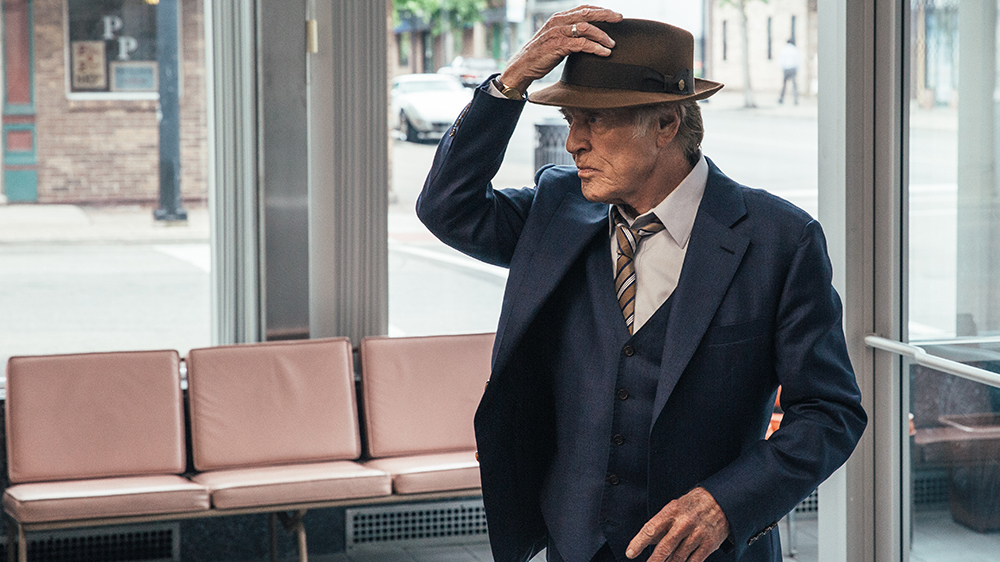
Robert Redford gets a fitting farewell as the real-life bank-robber Forest Tucker
What struck me the most watching The Old Man and the Gun, a film that will most likely be one of the many vying for awards for the next few months, was just how old everything felt. Granted, I came to the movie expecting this to some extent; the trailer –a beautifully done folksy hymn– set the stage for me by introducing Robert Redford’s swan song performance as the endearingly polite Forest Tucker. The titular “Old Man”, Forest Tucker was immortalized in a New Yorker article for, you guessed it, his unbelievable career as a professional bank robber who worked well into his 70’s. The subdued pensiveness of the trailer was merely a taste though of what my experience watching the film had in store for me.
Even beyond the confines of the flickering screen, just the act of walking into the theater felt like stepping through a rip in time and space into the past. A late Friday afternoon showing, I must have been the youngest person in the theater by a good 30 years. And perhaps unsuprisingly considering I was watching the movie in one of Berkely’s many rundown movie theaters, much in the style of old-timey Nickelodians the screen itself was barely bigger than the slideshow projection you’d expect to find in a high school biology class. The size of the room matched accordingly and I half expected the ringing-bounce of a nearby piano to begin playing and consume the room with its joyous score.
Despite being written and directed by a 37-year-old in David Lowery (the creator of the similarly existential A Ghost Story), The Old Man and the Gun continued this tone with a remarkably quiet film that, for better and worse, injects the film with a feeling that is perhaps most reminiscent of a dying men silently reflecting on the nature of his life. The intentionally blurry and neutral colored portrait of Tucker’s last stand when combined with the wrinkled faces of Hollywood stars from yesteryear and wrapped in a ballad of rhythmic jazz and guitar heavy folk songs offers a sweat yet definitively older feeling movie.
How much this succeeds in creating an enjoyable film, I think, may be up to the viewer.
For me there are many moments, especially towards the beginning, where this laid-back attitude bleeds too much into the creation of the scenes themselves, resulting in stretches that drag largely due to their lack of urgency. As a result, neither the emotional catharsis nor the story-tale joy needed for me to truly love this movie is present. In many ways, though it feels like these faults were consciousness artistic decisions and that my problems with the movie may be more just a matter of taste compared to the other movies I’ve reviewed this year. This is because, above all else, Lowery’s singular vision is not meant to be a riveting bank heist movie or an epic treatise on the human condition but rather an inquisitive look at a man Lowery finds interesting.
Yes, Mr. Tucker is an old man that robs banks and runs from the police, but noticeably absent from The Old Man and The Gun are the usual blood splatters and meticulously crafted plans that often define heist movies. Even Tucker’s gun is purely for aesthetic and not practical use. And while Tucker’s peculiar work choice and heroic yet uncompromising mentality may invite epic monologues on the purpose of humanity, Lowery notably maneuvers his ship away from these more expected ambitions as well.
In their place lies a simple workmanlike ode to a man doing what he loves because it is all he knows.
In fitting fashion Robert Redford gives possibly his last performance in a role that is understated yet fully Oscar-worthy not for its for exuberant adherence to method acting — which often belies the best actor race — but rather for its honesty. Neither objectively bad or good, Tucker is a nice man who makes decisions which bring with them a slew of negative consequences for him and those around him, yet at the same time, there is a sense of joy and purpose that he derives from his work that is deeply enviable. Even beyond Tucker’s whimsical fairytale though, the characters that surround him are also deeply reflective of this theme. Tucker’s newfound lover Jewel (played with a warmly iron grace by Sissy Spacek) is fiercely resistant to giving up the family farm she can no longer afford because she loves living there so much. Meanwhile, Tucker’s adversary Detective John Hunt (Casey Affleck), the police officer tracking Tucker, starts off as a tired and sullen man newly celebrating his 40th birthday as he wonders where his years have gone. But Tucker’s exploits slowly convince Hunt to take pride in his honest police work and loving family — the two things that, for better or worse, define the story of his life.
In our era of blockbuster-filmmaking built on extracting the most bang for the buck, a film like The Old Man and the Gun is very unique indeed for its willingness to take such a melancholic look at a fantastical real-life story. It’s not an exceptional film, but this is, to an extent, the entire point. The beautiful thing about Forest Tucker is not that he’s some ageless Sundance Kid that never stopped robbing banks, but rather that he never stopped doing what he knew and loved. And while it may not always be pretty for Tucker and those who share his creed, The Old Man and the Gun has a wry admiration for those who strive for a life honestly lived and a story well told.
Epic performances all around lead the ambitious yet flawed flick.
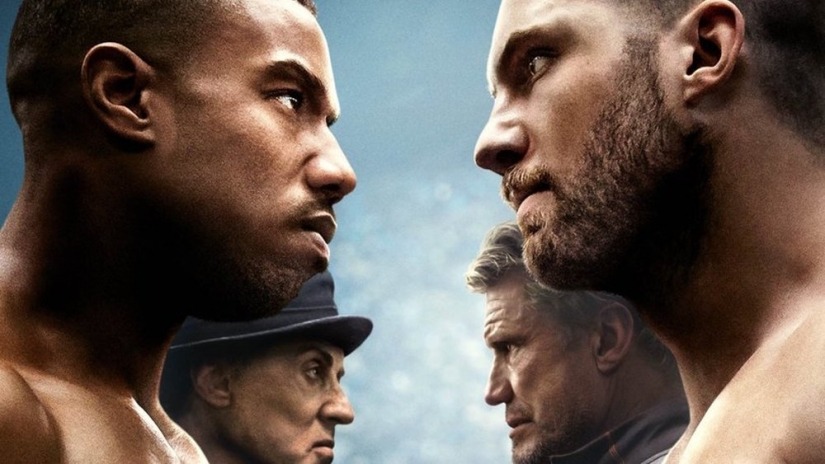
Rocky Balboa should be dead by now. So should Adonis Creed. A boxing strategy based around being pummeled in the skull 50 plus times every fight without bothering to lift a hand for protection isn’t a sound long-term plan. I can only wince at what the results would look like in real life; a bloody, swollen brain overflowing with fluid and tau proteins after it’s been put through the blender a couple thousand too many times. Luckily for our characters, and for us as viewers, this is not the case, as somehow over the years they have managed to defy the delicate nature of the human body and carry this improbably great franchise with them. And I’m happy to report that Creed 2 mostly continues this trend.
Much like our fighter’s tactics, while there are some undeniable structural flaws to Creed 2, it’s still able to prove itself a solid winner in the end. Powered by an absolutely jaw-dropping, knockout ensemble cast (yeah yeah I know, but believe me if MGM wants to use that line to promote their movie, by all means, count me in), Creed 2 is largely successful at delivering a heartfelt and thoughtful story while showcasing the same rousing montages and thrilling (albeit brutal) fight scenes that have become a staple of this franchise. But, comparing Creed 2 to the original –which was both my favorite film that year and one of the best films I’ve ever seen in theaters– it naturally falls a step or two short.
Of course, to me, that means I’ll only rewatch Creed 2 once a month instead of my daily biblical studies of the original Creed.
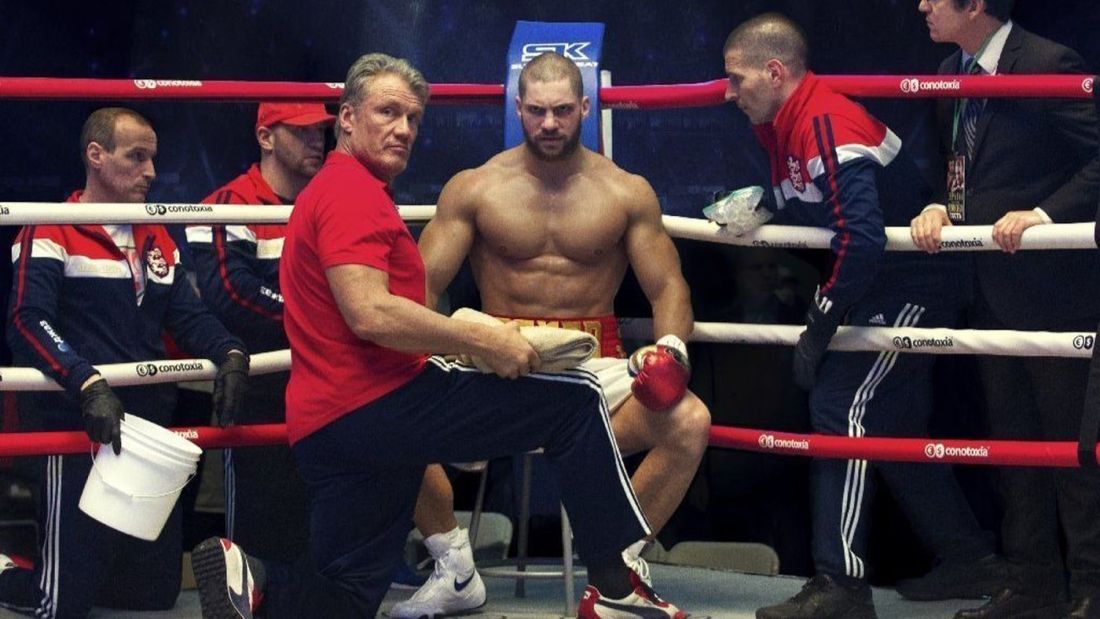
And look: while Creed 2 merely being good obviously renders it slightly disappointing in the shadow of the original, if you read about the basic plot for this movie and saw the 4th Rocky, you were probably (like me) nervous about the wreck the film possibly could have been. But what’s far and away most surprising about Creed 2, is that it turns this possible cheesy weakness into the film’s biggest strength. A direct sequel both to the first Creed movie and Rocky 4, Dolph Lundgren reprises his role as Ivan Drago — the former Soviet Union boxing champion who killed Appolo Creed before being beaten by Rocky. Similar to Rocky though, he’s the coach this time around for his son Viktor Drago (played by the real-life boxer Florian Munteanu). Yet while Creed 2 could have easily used the Russians as the murderous villains just waiting for Creed to give them what they had coming, they are instead respected with an extremely empathetic and human view of their admittedly tragic story. I’ve heard criticism of this movie not daring to touch the fraught political nature of Russia today, but it is Creed 2’s willingness to look past these societally constructed narratives that so dominate the boxing world as they do our political and social world, and instead dare to see these characters as people that is its greatest strength. And I mean come on, if you’ve seen Rocky 4 how the hell could you possibly demand a political angle from this series.
Exiled following Ivan’s loss to Rocky and left to rot in poverty in Ukraine, Ivan has raised his son to be a savage beast in the ring so he can carry the family to glory once again. A brutally honest depiction of redemption and finding one’s legacy, the simmering emotions that lay at the sleeves of the Russian team make for by far the best scenes in the movie, the franchise, and some of the best scenes of the year and I pray this is not the end of their stories. They may not have very many lines of dialogue, but Ivan’s conflicted anger and Viktor’s boyish fright cut deep and touch on the more interesting questions Creed 2 poses.
How do we let our legacy define us?
How are we connected to our parent’s legacy?
What’s really worth fighting for?
It’s not about politics this time around for Ivan and his son Viktor Drago. It’s personal
But while Creed 2 gracefully delves into these questions, I found myself most frustrated not by what was on screen but by what wasn’t. The runtime is an already decent 2 hours and 10 minutes but it desperately needed more. Not counting fighting scenes, the Russians couldn’t have been on screen for much longer than 10 minutes. I found their scenes the most fascinating to watch so it stands to reason I’d want to see them more, but even beyond that, the biggest problem I had with their absence was actually its effect on the emotional structure of the movie. There were obvious connections between Viktor and Creed’s story and by focusing on their duality Creed’s motivations and own story would have come into much better focus.
This need for more scenes was not limited just to the Russians however.
On the home front, the film tracks newly minted light-heavyweight world champion Adonis Creed (Michael B. Jordan) as he and his partner Bianca (Tessa Thompson) begin to start their family together. Meanwhile Rocky (Sylvester Stallone) is attempting to find a real family of his own before everything is shattered with Viktor’s challenge. These scenes of decidedly peaceful interpersonal-drama take up a surprisingly large percentage of the movie, although they’re by and large well enough done that it works. Although they won’t be acknowledged come award season, Jordan, Thompson, and Sylvester Stallone play off each other perfectly with Oscar-worthy performances all around and it is to their testament that these scenes work as well as they do.
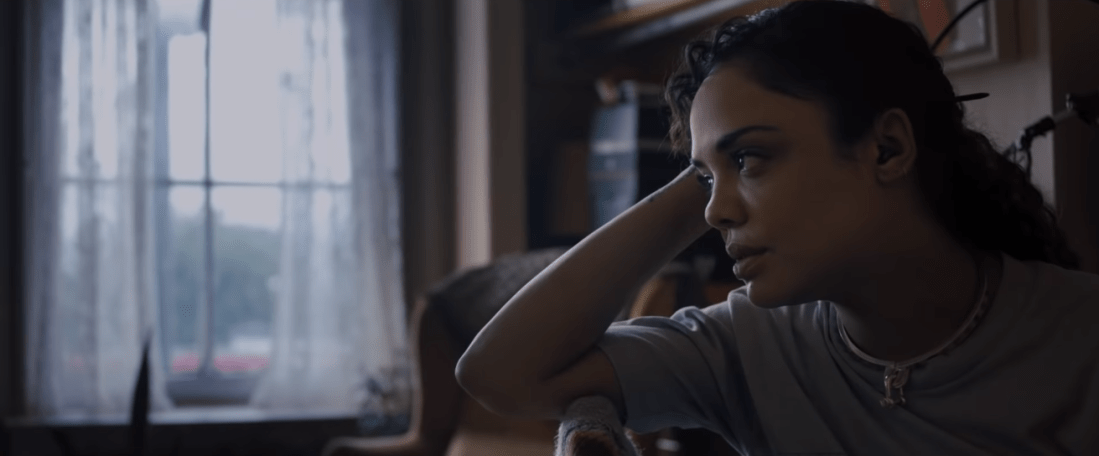
In the other big pleasant surprise of the movie, Bianca, a singer who is slowly losing her hearing, is upgraded to a quasi-co-staring role. It’s nice to see the patronizing and deeply sexist “worried boxer’s wife” trope thrown out the window here with a female character that matters deeply both thematically and plot-wise. Like Viktor, the career-focused Bianca strongly mirrors Creed in many ways and the film hurts from the failure to fully explore her own musical career.
And therein lies the biggest problems with the movie.
There’s enough here for me to infer motivations and themes about our characters, but the film has a uniquely desperate need for an extra half hour to flesh out its story fully. Besides just keeping Creed 2 from becoming the great film it could have been, these unexplored themes sap the emotional backing from the movie and make it so much harder to care about or understand these characters as I did in the first one.
More than just a victim Tessa Thompson’s beautifully acted Bianca character has a purpose in her own right.
If Creed 2’s struggles ended there I’d still probably place this film in my top 10 on the year. Compared to the first Creed though, there was an obvious drop off in quality that consistently pulled the movie down throughout. Thus, the difference between a good and great version of this movie. Rather than this being a typical case of a sophomore-slump due to laziness or missing identity, however, I think it’s fair to place a lot of the blame simply on the loss of writer/director Ryan Coogler (who was busy making Black Panther). Coogler succeded in the original Creed because of his ability to synthesize the feel of an epic popcorn movie with a deeply personal style of filmmaking. Dramatic long takes and a vividly shot Philidelphia were adeptly combined with brilliantly natural dialogue and then melded together with the ringing sound of a magnificent musical composition.
So while new director Steven Caple Jr. most definitely has a great deal of talent and more than shows it throughout, in comparison to the original it’s just a level below (although it’s important to note that the screenplay, which is penned by Stallone and Juel Taylor instead of Coogler is also a large reason for the tonal failures). There’s a somber quietness to much of the movie that, while still mostly entertaining to watch, makes the film oddly robotic at times and robs it of the humorous and cathartic feeling that defines prime Rocky movies.
And while the score (by the typically great Ludwig Göransson) and soundtrack (a solid collection of rap songs produced by Mike Will Made-It and featuring a who’s who list of artists) are expectedly strong, their usage was somewhat lacking and failed to carry with it the same awesome majesty of the first Creed. Underrated primarily because of a small sample size, for now, I seriously think Coogler’s work with Göransson (as shown by Fruitvale Station and Black Panther) has proven strongly reminiscent of Speilberg’s partnership John Williams.
Similarly lacking are the boxing scenes. While still enthralling and horrifying to witness, they suffer somewhat from a lack of ambitions and talent on Caple’s behalf who relies too heavily on quick cuts and reactions shots to stitch together the dramatic punch that came so easily to Coogler. At the risk of sounding like a broken record though, I just needed to say again just how damn intense these fight ended up being to me even despite some of my problems with them. Sound-mixing is rarely something that’s noticeable in a movie but my god if the ferocious orchestra of sounds inside the rings didn’t dramatically help the boxing scenes that were obviously missing the expert choreographical eye of Ryan Coogler. The sound mixer Damian Canelos (who a quick IMDB search told me was also the mixer on the terrifying-sounding Cloverfield movie) is total, 100% deserving of the Oscar this year. The sickening crunch of bones and smack of skin on skin made me feel every punch right to my inner core and in turn, aging me a good 10 years and creating one of the more R-rated pg-13 movies I’ve ever seen.
Reading through my review I realized it sounded more critical than my experience truly was. I guess that’s always the nature of a B+ movie: you like it enough that you can see the glittering mountain top and the bitter sting of missed opportunities becomes stronger on your tongue. But who am I kidding though? I loved watching this movie just like I love this franchise, and I know I’ll be back in theaters for a rewatch within the month. Because despite its pitfalls Creed 2 brings what it needs to. Great performances, soapy-but grounded melodrama, orchestral thunder, and some truly fantastic moments. And if this really is Rocky’s last rodeo, what a rodeo it’s been.
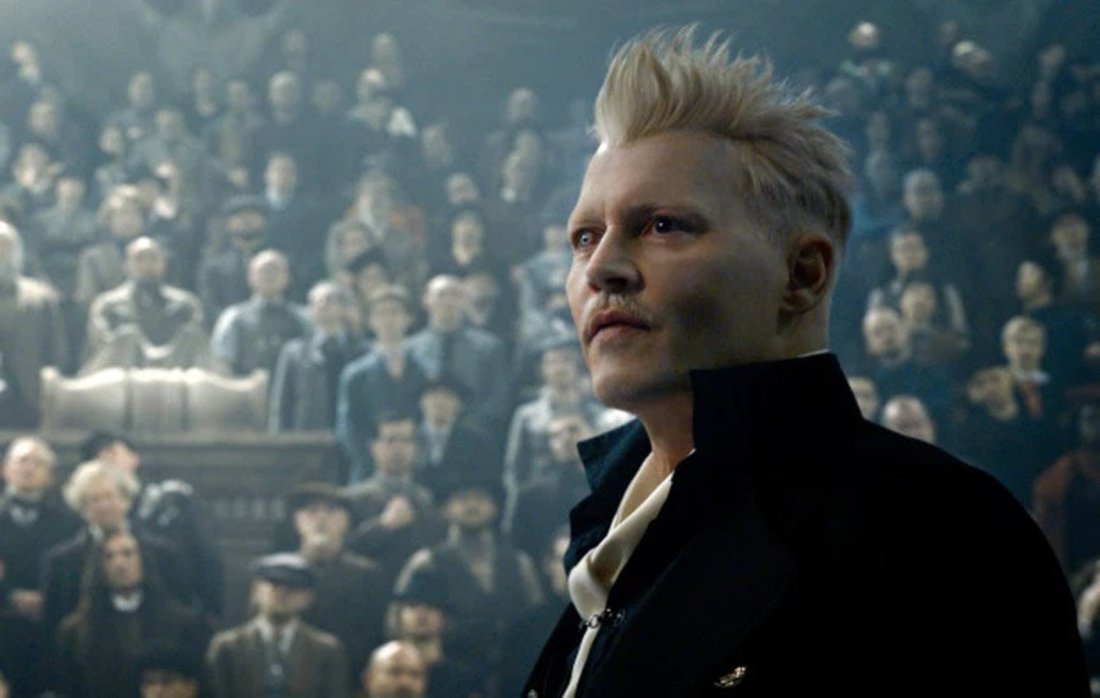
Johnny Depp makes an excellent return to form as the villain Grindelwald; too bad he appears as little more than a cameo.
Walking out of the theater a couple years ago after seeing the first Fantastic Beasts and Where to Find Them — J. K. Rowling’s prequel series to Harry Potter– I was under the immediate impression that the movie would work better as a miniseries. While good chunks of the film were dry and forgettable, I liked enough of it that I was convinced Rowling’s sprawling Wizarding World offered an extreme overabundance of colorful characters and stories worth watching. And while a few two and a half hour films weren’t big enough to hold and tell these stories, given more time these ideas could be flushed out and explored to their full potential. In hindsight maybe this more wishful –and even fanboyish– thinking was the result of what this series had meant to me growing up; Harry Potter was my gateway drug to reading and I was captivated by the universe. I wanted to experience the magic that extended beyond the corpse of Lord Voldemort.
I still do.
I still believe there are more Harry Potter stories worth telling. But after watching The Crimes of Grindelwald, the second of five planned movies in this series, it’s become painfully clear just what this series is and what it needs to succeed.
It doesn’t need more runtime. It needs a damned editor.
In all honesty, maybe it’s unfair –unwise even– to bet against J. K. Rowling at this point. She has five movies to right the ship and the overarching narratives of the original Harry Potter series showed just how masterful a grip Rowling has over storytelling. The dangling threads of characters and plotlines that may seem like excess now, could very likely be woven into a masterful tapestry by the end. But at the very least with the first two additions to this new franchise, I can definitively say Rowling is suffering from the same self-fulfilling fate that has doomed world-building auteurs, like herself, in the past. The most obvious example of this (and probably the one you’re going to hear most about elsewhere) is George Lucas’ Star War prequels, although there are numerous other instances of this pitfall such as Tolkien’s posthumously published Silmarillion. Essentially, after creating a new universe for his original story (Star Wars), Lucas fell so in love with Biblical-sized creation that he felt compelled to share and create all the excess intricate details of his world. The result, while admittedly often entertaining and fun to witness the sheer scope of it all, was ultimately a god-forsaken mess. And while the Fantastic Beasts series does not reach nearly the same level of incompetent dialogue and sheer stupidity as the prequels –Rowling is simply too talented of an author for that– it’s been just as much as a disappointment. Because a good Wizarding World prequel doesn’t need famous characters and locations shoehorned in for the hell of it (honestly I don’t care about learning Voldemort’s snake’s backstory), it needs an interesting and coherent story.
And there are hints of this. There are many scenes that work and it is because of them that I am writing with a stronger feeling of frustration rather than abject hopelessness. Centered around the MacGuffin from the previous movie, Creedence (Ezra Miller) –a lonely orphan with a serious Jekyll and Hide ailment that grants him unmatched magical power — The Crimes of Grindelwald pin-balls around a Game of Thrones-sized cast of characters as they all attempt to reach the boy (read: weapon) first. The personal motives for each character are (rightfully so) complicated, but the film essentially pits the fearmongering populist Grindewald (played exceedingly well by Johnny Depp although sorely missing the last films casting choice of Collin Ferrel) against Dumbledore (an always excellent Jude Law), the ministry, and the “good guys”. It is this direct power struggle that succeeds the most throughout the movie, providing us with bigger and better characters and greyer questions.
Albeit in a small role, Dumbeldore’s cruelly manipulative nature gets a chance to rear its fascinating, ugly head, while Johnny Depp’s fearsome Grindelwald is able to throw off the overly simplistic depictions of evil that plagued that original series and show timely glimpses of a villain more suitable than Voldemort for today’s times. Without giving too much away, the character of Grindelwald single-handedly carries the tantalizing climax that both saved the movie in my eyes and provided legitimate hope for future installments. In fact, if the movie had lived up to its very title and made Grindelwald a starring character rather then (quite possibly due to lack of money) relegating him to a borderline cameo, then this would be a completely different review.
Instead, The Crimes of Grindelwald gets utterly lost in a convoluted maze of uninteresting and overly narrative subplots and characters. The scenes with the starring Newt Scamander and his gang are funny at times, but not nearly thematic or endearing enough to be any worthwhile in the end (which is a big problem considering they’re the protagonists for this entire franchise). While Newt’s awkwardly inward personality may read better in a novel that gives us the chance to take a dive inside his head, in these movies, for Eddie Redmayne it’s hard to gain any sympathy at all for a character that is so cold. All the while, a forgettable group of side characters that would really even be considered excessive in one of Rowling 5,000 page novels (maybe some of them were from the ministry or something? I honestly can’t remember at this point) further undercut any semblance of coherent storytelling.
A rough start to this new franchise doesn’t mean the end. Look no further than the first two (rather not good) Harry Potter movies and how the series was able to quickly bounce back. But to do that, to make a successful comeback, Rowling and the creative team at Warner Brothers need to make a change. They need to get their story straight. They need an editor. They need a co-writer. And maybe, just maybe, they need to take a good, long look at the Rowling’s role in these projects.
Because similar to what Harry was told in the original series: Ms. Rowling, you can’t fight this war on your own.
Rami Malek (as Freddie Mercury) is unable to save this lazy wreck of a movie
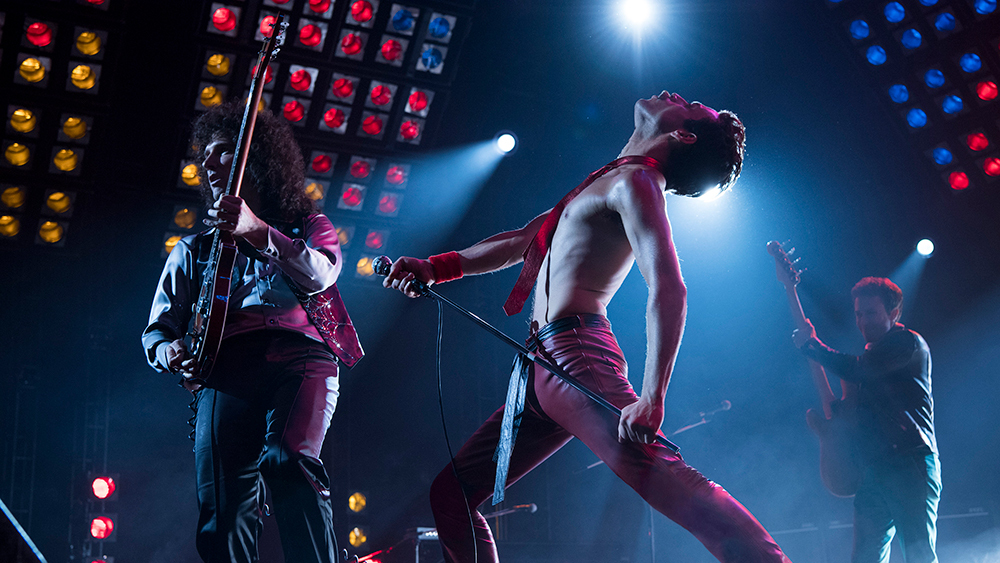
Queen is absolutely incredible. They are extraordinary. Not just another good band, they are the band. They are all at once thrilling, beautiful, profound, and completely inexplicable. No musical artist in recent history could so deftly defy time like Queen, transcending the normally ironclad walls of taste and cultural gaps simply because of their sheer magnificence. Old or young, cool or nerdy, fat or thin, it doesn’t matter. Everybody knows them. Everyone at some point has heard the impossibly large range of Freddie Mercury flying and swooping like an orchestral trapeze artist through the tragedy of Bohemian Rhapsody, as people listen and below along with joy. They are real-life superheroes; a core part of our cultural identity. Purely, inarguably, magnificent.
That’s why it’s so frustrating that Queen is anything but that.
Granted lots of stuff is mediocre. The majority of movies and books and songs created any given year are superfluous space holders; not truly offensive, but nothing more than bargain bin clutter not worthy of more than a precursory glance. Still even beyond that much of the going on’s in our everyday life are nothing special; mindless trods through chores and commutes and work that are forgotten practically before they even happen. But Queen wasn’t mediocre and therefore a movie about them can’t be either because then it’s missing the entire point. A movie about Queen has to be able to capture that exceptional nature to the band. It can’t just be a line-by-line summary, because that neglects the wonder of Queen and Mercury that made the band so astounding to us.
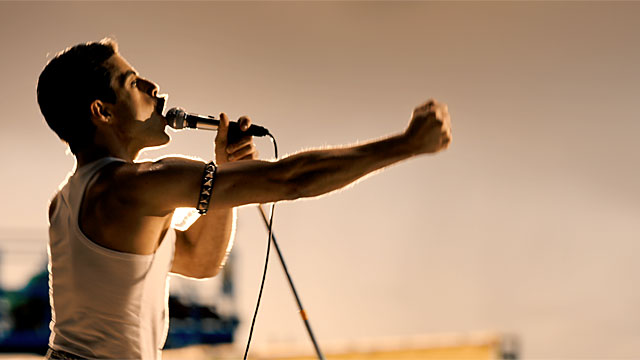
But neglect this sense of wonder Bohemian Rhapsody does with a viewing experience that plays less like catching a glimpse inside the world of Queen and Mercury and more like scrolling through Queen’s Wikipedia page while watching old concert footage stuffed between the paragraphs. Spending the first half of the film tracking Queen’s rise to prominence and the latter half tracking Freddie’s downfall (while finding ways to shoe-horn their greatest hit songs in along the way), Bohemian Rhapsody is unable to find a tone, a message, or even a subject to focus on, resulting in a poorly paced and inexplicable trifle of a movie. And that’s because, beyond the admittedly fun performance scenes, Bohemian Rhapsody has no idea what it’s supposed to be. Is it a character study of Freddie’s genius, is it a celebration of his artistry, or is it just a fun bus-ride with the band? The scenes that work better are indeed the ones that focus more on Freddie, but the film instead chooses all and none of the above options and is rendered disjointed and crippled because of it.
Who is the real Freddie Mercury?
Of course, many films — especially in the notoriously difficult bio-pic genre — have trouble finding a consistent tone and maybe trying to analyze Freddie Mercury and Queen’s popularity is a more difficult task than it would initially seem. But it is the complete lack of effort here that is so disturbing and, in the end, revealing. Because what is the point of a movie like this if it’s not even going to try and explain or comment on the nature of its subjects, especially one as culturally relevant as Queen and Mercury? The answer is so obvious I’m sure I probably don’t even need to state it, but here it is anyway: Bohemian Rhapsody was never interested in understanding the glory of its subjects because it cared only to capitalize off of it. And it worked! Blasting through box office records at supersonic speeds, the popularity of Queen shown brighter than the stench of its mediocre buzz. It’s cliched to call Bohemian Rhapsody a blatantly conceited cash grab, I know, but in truth, that’s really all this movie is. “Directed” by the notorious abuser and all around piece of work Bryan Singer –who was actually fired because he neglected to bother even showing up for work most days– there is no vision here. In fact, there’s barely a coherent movie at all.
Whatever its flaws, though, a tentpole project like Bohemian Rhapsody is not going to be completely irredeemable, and there are whiffs of something better buried in the clutter that at least makes for an occasionally entertaining few hours. The firey concert scenes live up to the hype, deliver jolts of pure electricity and transformative beauty. And once you get past the tiresome rock-movie cliches, there’s a somber reflective nature to a few of Freddie’s more personal scenes — even though Bohemian Rhapsody doesn’t take them nearly far enough.
But it’s really only the ensemble that manages to bring a level of consistency to the film, as they somehow manage to respect the film’s subject matter and work hard despite the suffocatingly bland script (by professional bio-pic screenwriter Anthony McCarten). Rami Malek puts everything into his take on Mercury (which would have been a lock for an Oscar nod in a better movie). Even if his excessive performance appears reeked to me of over-acting and extreme simplicity at times, there’s at least effort given. And the cardboard cutouts of the rest of the band, provide at the very least a modest hint of comic contrast with Freddie. Even Mike Myers, who went missing a long time ago, shines through the delightfully arrogant growl of a record producer (forget Love Guru and give him a chance baby!).
As disappointing as Bohemian Rhapsody was all around though, it was the first movie I had seen in a theater since before classes started. It’s not that I haven’t seen movies (or new movies) during that time, but for whatever reason, I just haven’t been able to pull myself — and more importantly others– to walk the half mile to the theaters in downtown Berkeley. So getting the chance to succumb once again to the smell of popcorn and the flashing lights of the screen was a relief beyond words. And while the movie may have failed to capture the glory and complexities that made Queen so exceptional, getting to hit the town with friends and enjoy myself made it all worth it in the end. Listening to Bohemian Rhapsody back in our dorms — the real Bohemian Rhapsody — I was comforted in the knowledge that at least some of Queen’s fun-loving spirit had survived the night.
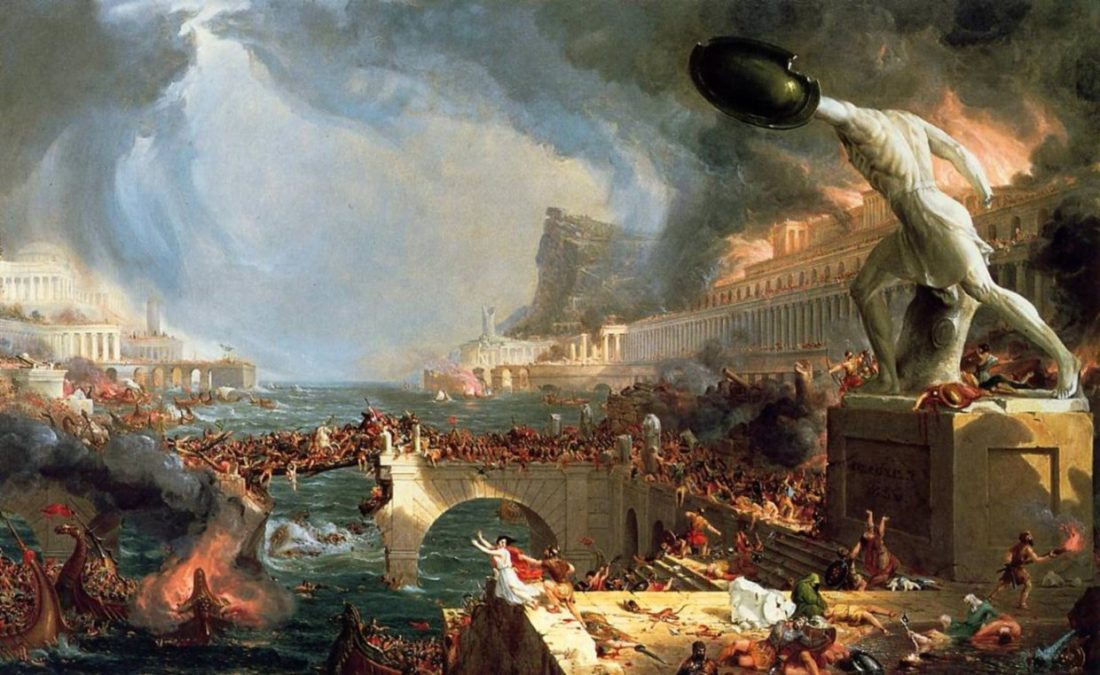
The burning of the Library of Alexandria: A reminder not to put all your eggs in one basket.
In between the sea of looming towers, I find a sense of absolute peace in the sleepy gloom of fluorescent light glancing off the marble floors. It is a greater peace than I could find on the top of any solitary 14er or in the silky ripple of wind floating across a deserted desert highway. No. Because at its essence this peace is the certainty of safety. Not safety in the physical sense –not from disease or predators or mother nature– because clearly there’s little armor that splotchy inc on drying paper could actually provide me, yet there is a sort of indescribable feeling of ease that warms me just with the knowledge of the library’s existence. The knowledge that like stars in the sky, billions upon billions of human thoughts lay tightly mashed, bound, and sewn together just a few hundred feet in every direction of me, standing forever on guard with open arms to fall back into. From the first inklings in the ancient Middle-East to Socrates to Harry Potter and everything in between, literature has carried culture and the pulsing human heart far beyond their natural expiration dates and into a world where practically any breath can be easily printed, copied, and spread to every single inch of the globe. And there comes with this a transformatively comforting sense of certainty for me: the certainty that no matter what human thought will survive until our end.
Therefore it should come as no surprise that wandering around the UC campus my first few days here I was immediately pulled to the main library on campus. Underneath the main pantheon structure of Doe Library, 5 stories of books wrap in a Guggenheimian fashion far into the earth below. At least the first time I went there was not a soul to be seen (unfortunately I can’t say this is still the case) so the only sound that hung in the air was the rhythmic hum of the ventilator shaft, quietly. Meanwhile, the distant aroma of well-worn paper brushed at my nose as it wasted over the vast expanse. And the books. Oh, the books. From the classics to the NYT Best-Sellers list, each forgotten drop of ink buried in the beaten and bruised covers would be enough to practically form an ocean if combined. They were countless in number and exponentially bigger than their typical 3-inch diameter betrayed. In fact, the library seemed to spit in the face of Newton and Einstein in its ability to warp space-time into a dimension of inherent immortality. My troubles were shed at the doorway.
I was safe.
I was at peace.
And I left without reading a single word.
It’s not at all that I dislike books; on the contrary, I greatly enjoy them and consider the reading of fiction and non-fiction alike to be nearly as essential to human development and survival as food or shelter. But like many others, I too often revel in ideology while neglecting to walk the walk and so I read when inspired and turn a neglectful shoulder when I am not. In my mind’s eye though, the beauty of a library is certain because the beauty of the library for me is that it exists at all. The beauty is that as long as it stands, I can potentially count on it.
And it is this exact same thinking that lead to the downfall of the classic/indie streaming service FilmStruck. For those that don’t know FilmStruck, owned and operated by TCM, was the Netflix for cinephiles, proudly boasting 1,200 films from the criterion collection and more than 600 other independent and foreign films. In the face of ever-decreasing diversity in films put out every year, FilmStruck was an immensely valuable and important public service.
And it was doomed from its inception. Completely and totally screwed. Despite the incessant pleas splashed across entertainment blogs and screamed from auteurs like Bill Hader, Guillermo Del Toro, and Edgar Wright, and button-mashed from online petitioners, FilmStruck just isn’t fit to succeed in a world of humans who by their very nature struggle to go past the event horizon of ideology when they are already secure. Because let’s face it: we like the idea of preservation of history and culture, we like it because our principles tell us to like it, but by God its just not as fun as the alternative. Popcorn, Marvel, a damn good time. That’s where the money is, so the strategy of preserving less popular material by putting all the eggs into one purely capitalist basket is ridiculous. I mean think about it, if governments didn’t fund and support libraries (and if you think about it it’s an absolutely breathtaking achievement that they do), would you really pay for a subscription to a library?
Don’t get me wrong though, I am for preserving these films just as I am for reading books and maintaining libraries. There is monumental importance in the joy, pain, and lesson learned from these pictures, and just because they don’t have the same slick look and style of today does not mean they are somehow incompatible. On the contrary, so many of these movies have stories just as relevant and vital today, and to lose them would be a blow of epic proportions to our cultural and societal well-being. And Especially at a time when film studios like Disney monopolize and constrain the industry more and more, the power to produce diverse and equally deserving visions of our world is of paramount importance.
However being for something (as evidenced by our–uh– recent elections) is not the same thing as making that thing happen. And if we want to save these films from being nothing more than memories of the dead, we need to find alternatives to FilmStruck. I believe to do this, we first need to ask why we are bothering to preserves these films in the first place. To me, there are two main reasons: 1. The entertainment value of these films, and 2. The historical/cultural value they bring.
Now the entertainment aspect is the easiest. While these movies may appear as impenetrable and dull to some on the outside, there are many films that would prove absolutely absorbing even to a modern audience. Remember if Jerry Maguire can make 300 million dollars at the box office, then it’s clear that Americans might just have a more varied taste than the redundant franchises and superheroes of today would let on. Therefore it should make only perfect sense for the bottom lines of Netflix, Amazon, and co. to push a wider variety of films to attract more viewers (keep in mind these movies are often much cheaper to gain the rights to than new releases). There should be a fix here that would help keep these movies alive.
The more difficult aspect, unfortunately, is the historical/cultural angle.
To start off I believe it’s important to note just why leaning on FilmStruck preservation is such a poor idea. Taking lessons from the Lost Library of Alexandria for instance, it’s probably not particularly smart to keep everything in just one place less it go up in flames in an even more permanent way than FilmStruck. But then where should we put them? I’m honestly not sure I know the answer to that. Most of these movies aren’t just free domain titles, which means someone they’re being sold or streamed for a profit. If FilmStruck wasn’t seen as a viable moneymaker, then I don’t know if streaming many of these movies for a profit is truly possible. Building interest in the movies is possible over time and could prove quite useful; instituting film studies into the classroom like books is definitely a worthy possibility that could change cultural perception to different types of film and art in general. Whether this will be done in an American public school system that is already so poor is doubtful, but not altogether implausible. Therefore the only strategy that truly makes sense to me is the most obvious one: model it after libraries. Getting the government more involved in not only preserving copies of these worthwhile films but allowing the general public to watch them is a worthwhile cultural endeavor indeed. It’s true that some libraries already carry DVD’s of a large number of these types of movies, but it’s important to modernize in our technological age. In fact, there is a strong argument to be made that the government has the obligation to preserve these films for both historical and cultural reasons in the eyes of the public, and maybe even create a streaming service of their own.
I don’t know how plausible that is, but whatever way is ultimately the best at preserving these films, the bottom lines is this: the belief in these films is not enough. It’s nice to support the idea of culture — I mean how many totalitarian hell-holes throughout history have persecuted and choked out any ray of light in their state — but if we choose to ignore our own overabundant supply, it will be the same result in the end. That’s because art and opinions are intrinsically human things and therefore cease to exist away from us. So if we look away from them for too long and when you turn your head back they will have already been wisped away by the breeze. So if you want to save classic and alternative film, don’t just rely on a second-rate Hulu rip-off. FilmStruck is dead. But FilmStruck was never the answer. To save this art people have to act. People have to engage these films.
People must reject the tranquility of principled ideology, and embrace the adventure of putting those beliefs into practice.
Despite his limited workspace, John Cho shines in heartbreaking performance.
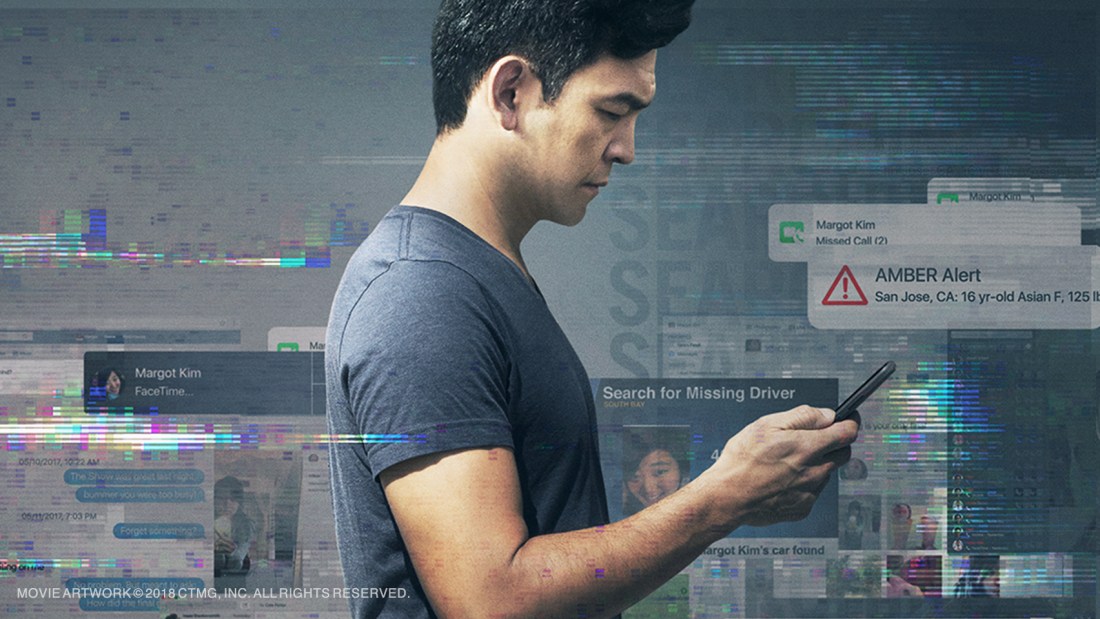
Searching’s decision to set its entire run-time in the small confines of computer and phone screens reads at the outset like a cheap gimmick. And in all honesty, there is some truth to this. The premise is a rather simple and common one: following the disappearance of his high school daughter Pamela Kim (Sara Sohn), David Kim (John Cho) will stop at nothing to find her again. Done, stamped, Liam Neeson approved. But the film’s structure provides Searching with the exceedingly easy ability to spice up the rote monotony of it all, while at the same time significantly reducing the costs associated with the elaborate set pieces and intricate production designs common in Hollywood thrillers. However, it is to directors and writer Aneesh Chagentry’s credit that Searching does not simply rest on its laurels and follow through on what one may expect to be a conceited cash grab aimed at millennials. Instead, it uses its premise as a jumping off point while it smartly layers the decisive element of technology through Hitchcockian suspense and boatloads of intricately plotted clues and red herrings: the human element.
And it is this personal dimension to Searching, rather than any of the banked turns and plummeting hills of which the film so adores, that remains consistently the most shocking aspect of that movie. In a heartbreaking opening scene that’s reminiscent of the famous opening of the Pixar movie Up, Searching sews together a tapestry of pixelated computer programs that trace the bitter-sweet chronicle of the Kim family as they raise their daughter Pamela. It’s a deeply moving introduction to our characters, but even more so than that it was a huge sigh of relief for myself. Unlike recent films such as Unfriended or Upgrade which exist solely to warn of the inherent dangers and evils of advanced technology, Searching immediately exuded a comfortingly modern sense of nuance which would carry on throughout its entirety.
Assigned to help David is the seasoned detective and similar single parent Rosemary Vick (Debra Messing). Rarely seen at all, Vick’s icy voice serves as a voice of authoritative reason in dichotomy to David’s increasingly frantic hysteria. For as David slips farther and farther into a twisting hole of complicated Facebook friendships and melancholy social media portrayals from his daughter Pamela, the farther apart he gets from his daughter he thought he knew. Luckily Detective Vick’s experience as a single mom provides her with the adept ability to emphasize with David, and the give and take between the two allows Searching to Ponder interesting questions of parental responsibility. These conversations, in turn, are probably the most successful scenes in the entire film. Like a well-worn diary, Pamela’s technological footprint gives David a confounding look at a daughter he barely recognizes, and when things ramp up ask hard questions about the power a parent actually wields in their kid’s life. Therefore while the story is told through technology, yes, Searching is careful to use it as a tool rather than shining the limelight directly upon it. Because in the end technology is an extension of us. Neither totally good or evil, it exists as the virtual third arm of modern humans on which we project our lives. So it only makes sense to use it to analyze the human condition and not the other way round.
Of course, while the emotional resonance is vital, I’ve neglected so far to praise probably the most important part of what makes Searching so addicting to watch: the mystery itself. And it is to the credit of writers Chagentry and Sev Ohanian that the mystery itself is as good as it is. Intricately mapped out and thrillingly unpredictable, Searching has the uncanny ability to seemingly pull the rug out from underneath the audience at will. And while the trapped nature of the stage makes for occasionally gelatinous and suffocating moments, it’s all worth it in the end. The carefully cloistered walls of the flickering screens allow Chagentry to hammer the audience with a rapid-fire succession of plot twists and observable evidence that build a steady pace of momentum before the chips finally fall into place. And fall they do.
Tying these two elements together, however — the plot and heart — is easier said than done and it is a great credit to Jon Cho’s talent and charisma that David is able to transition so well between the narrator and emotionally wrecked protagonist, in turn steering the small cart. Jon Cho, who up to this point is probably best known for his more comedic turns as Harold in Harold and Kumar and Sulu in Star Trek, brings a sterling command of emotions that is somehow able to transcend the inherent limit to the role. Sullen eyes and a tragic weariness on Cho’s worn face are betrayed by fearsome outbursts of a father’s fiery love of his daughter. And the strong performance was made even more impressive considering just how little Cho could actually do, with the portrait-mode view from Facetime and the heavy reliance on voiceover leaving little creative (or physical) wriggle room. While the computer programs and texts and animations provided more visual entertainment than the similarly constrained Tom-Hardy flick, Locke, Cho’s performance still acted as a one-man show of sorts and thus needed to be really good. In fact, it was because he was so good, that I found myself getting increasingly frustrated that the structure of the movie prevented him from escaping his little cage and taking on a more wide-ranging performance. Cho has the talent and looks to be a bonified A-lister and it was incomprehensible to me why no one else could see what Searching so clearly proved (in the context of Crazy Rich Asians which came out just a few weeks earlier, I think the answer is depressingly obvious). But thankfully Searching chose Cho to star because Searching, despite what it may seem from the outside, is concerned first and foremost with making a good movie. And besides a sometimes static nature to it all, Searching’s twisty and personal journey through the electronic imprint of the human brain creates an enthralling and surprisingly poignant Friday night mystery.
This is not gonna be just another “going to the movies by yourself is underrated” hot take. It’s all too easy to catch a glance of that sentiment whizzing around, splashed in Ariel bold on the front page on any number of film connoisseur sites. That’s not to say there isn’t a benefit to watching films alone. There is, just as there are very definitive reasons to watch with others. But I believe what is far more interesting than telling you who you should or should not watch the new Marvel movie with is looking at our personal connection as humans to the movies. What makes us want to watch films with others and what makes us yearn for the isolation of an empty seat?
I never used to go to movies alone. To be fair, this was in large part because I lacked free access to money or a car for the better part of my childhood. My dad was stunned at even the notion; the idea of going to the theater alone was as nonsensical to him as the idea of me becoming a Republican. Even when I had the means to do so in later years, a pained expression of disappointment spread over his flabbergasted face when I told him of my introverted plans (though I’m sure there are worse taboo failings for a father to be disappointed about). This view was not solely self-contained to him, however, and instead reflected a widely-held belief in American society: going to the cinema is a social excursion. And so that’s what I believed without a hint doubt or apprehension. Looking for something to do on a lazy Saturday afternoon? Go watch a movie with the family. Cousins in town and nothing to do? Go watch a movie. Looking for an excuse to chill with some friends? You know the rest.
It was habit. No. It still is habit. Because even when I gained a car and money, even when I got MoviePass last year, I would tell myself over and over that I would go alone. That if I had free time I had a cultural obligation to my soul to see these movies.
And I would almost never go.
Don’t get me wrong, I loved it when I did. The crackling fire on screen would twirl puffs of hallucinogenic smoke around me, enveloping me, melting away the outside world to draw me into a personal confrontation with the reality they created specifically for me. The first film I managed to compulsively see alone was the disaster at sea flick “Adrift” (starring Shailene Woodley). It was by no means perfect, but the orgasmic beauty of an infinite, painted ocean joined with the breathless fear and passion in the boiling pot of our protagonist’s life shredded me. I struggled to keep the Pacific Ocean itself from seeping from my narrowing eyes through most of the final act. And yet, when I walked out, the world still strutted along completely oblivious to my trauma. It was personal like reading a book, yet with the visceral imagery that only a movie can provide. There was no need to build carefully articulated talking points or views to discuss with my companions, nor was there the shared experience that undercut the direct emotions of the picture. I was alone. Free to soar through golden clouds of hope and bob up and down in the oozing tar of a vast ocean of despair. I’m not a religious person, but that kind of connection was spiritual — like a man gazing up at the intricate majesty of Vatican sculpted beauty. And it would not have been the same with others.
And yet I still remain hesitant to do this; frozen restraints gripping me in place whenever I think of eloping by my lonesome to a theater. I believe, beyond social convention, there is a reason for this. A reason that explains the very point of film as a medium.
To be a spectacle.
As artistic and transcendent as a film can be, there’s a reason it’s not a book. There is a reason movies play on the big screen. A reason their release is endowed with such cultural reverence and a reason why the people who create these pictures treated as gods. Film is first and foremost a spectacle for the masses. A great novel can be enthralling and poetic, but it can only really be personal. It can’t be read with others, and the market is so overflooded that rarely do they have the same widespread cultural touch (at least when they are originally made). As a social and now international species, we crave this sense of connectedness. In fact, even in the old days, famous authors would go on book-reading tours to give crowds of people a taste of this relatability that pours out of every crevice of society today. The advent of movies, however, created this feeling in an easily manufactured and distributed product.
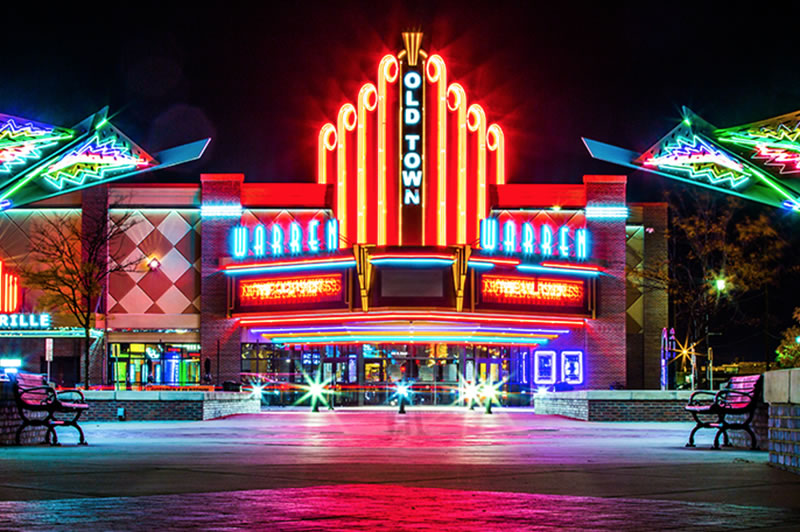
The blinding aura of neon italics demanded the attention of the masses for Christ’s sake, not wandering art enthusiasts. The greatest show on earth.
An illuminating view
And you know what, something in that sentiment actually speaks to me.
We watch movies with other people to revel together in the splendor of an incredible show. We don’t want to watch it alone because the point of it is to be bigger than a simple personal experience. So even though we sit in silence at a theater, a silence that can be as ear-piercing as it can be awkward, the emotional ties created from witnessing something bigger than ourselves, something made for the masses, build something more than the muted sum of its parts. Movies are loud, brash roller coaster rides, what fun is there in screaming alone?
Of course, that doesn’t mean all movies need to be seen with other people. There is something to be said for the personal holiness of a singular viewing experience, and oftentimes not being able to talk killed the social aspect that movies can really only play into. That’s why, as great as it was to have an excuse to hang out, on some of those fading summer nights I wish we could have just found another way. But that shared carnival of light, in the right conditions, can both allow for this necessary dialogue between humans while at the same time give them the shared experience that’s so damn magical. I made sure to note last time that I’m not a talker at movies and I try to remain true to this, but being able to watch and crack comments when watching a movie is one of the most enjoyable experiences imaginable.
I’m not all that great at meeting new people. I’m not altogether terrible at it; I’m capable of meaningful conversations and when I do form a bond with someone I often create deeply held friendships. But I sometimes don’t know entirely who I am, especially on the outside, when I first begin talking to people and this can lead to rather basic and forgetful q-and-a sessions. I suppose that’s part of growing up and will change with time, but in the meantime, it creates a nagging problem that I need to get past. In my first few months here one of the repeated bonding hangouts that is noticeably common is streaming movies together.
This has been a godsend for me.
By using the countless entertaining and personal moments from a film as a springboard, I can find pieces of my beliefs, my experiences, and myself, and connect with others. For example, “regretfully” instead of studying, I have consistently binged the first 2 seasons of Game of Thrones with new people, using it both as an enjoyable time to talk and as an undeniable shared connection. Likewise the first friend group I made originated around all of us seeing Crazy Rich Asians together. And even beyond college, I spent some of the inarguably best moments of my life and dicking around with friends while watching god-knows-what movie on tv.
So, after that overlong, rambling stream-of-conscious what in the hell is the answer to the original question: “What’s the point of watching movies with friends”? Like any good question, there is no one clear answer. No neat-and-tidy thesis statement to take away with you. Watching movies with friends can be pointless. A lazy, unimaginative mannerism of a repetitive society, where we replace genuine human connection with simply sitting next to each other as we overdose on filtered mass media garbage. And therefore it can be so much better to just watch movies alone like I fought to do so many times. But it can also be something greater. A mesmerizing emotional quilt of shared connections and talkative comradery. Something that has built the backbone for so much in my life.
It can be all of these things and it can be none of them. But in the end, alone or with friends, there are worse ways to spend your time than watching a movie.


 David's Bayside Movie Reviews